Refractor vs. Reflector: Which Telescope Fits Your Desires?
3 September 2026 · 6 min read
A refractor offers sharp, low-maintenance views through lenses, while a reflector delivers more aperture and deeper views of faint celestial objects for your budget.
Refractor or reflector? Compare telescope designs, aperture, image quality, maintenance, portability, and deep-sky performance to find your ideal scope.
Choosing your first telescope is less about finding a universally “best” design and more about deciding what you want to see and how you want to observe it. Do you want light to pass through a glass lens, or would you rather collect it with a mirror?
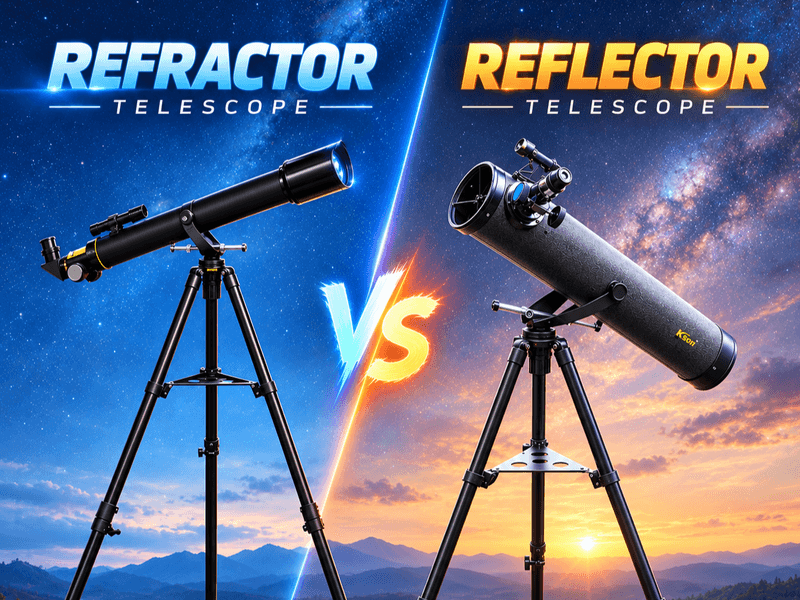
Refractors and reflectors take fundamentally different approaches to gathering light. A refractor uses a lens at the front of the telescope, while a reflector uses a curved mirror to collect and focus incoming light. Both can produce impressive views of the night sky, but their strengths are different.
For a beginner, the decision often comes down to a balance between sharpness, aperture, portability, maintenance, budget, and observing targets.
Refractors: Simple, Sharp and Ready to Go

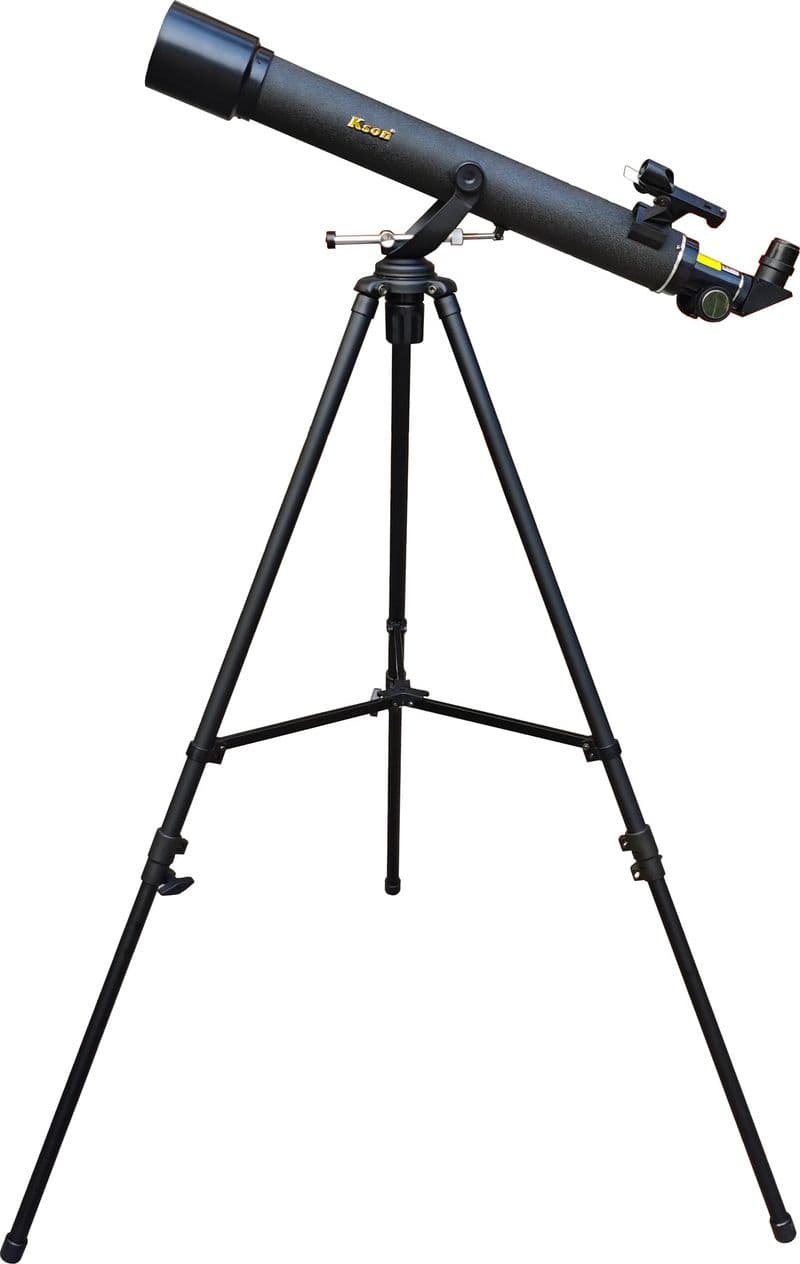
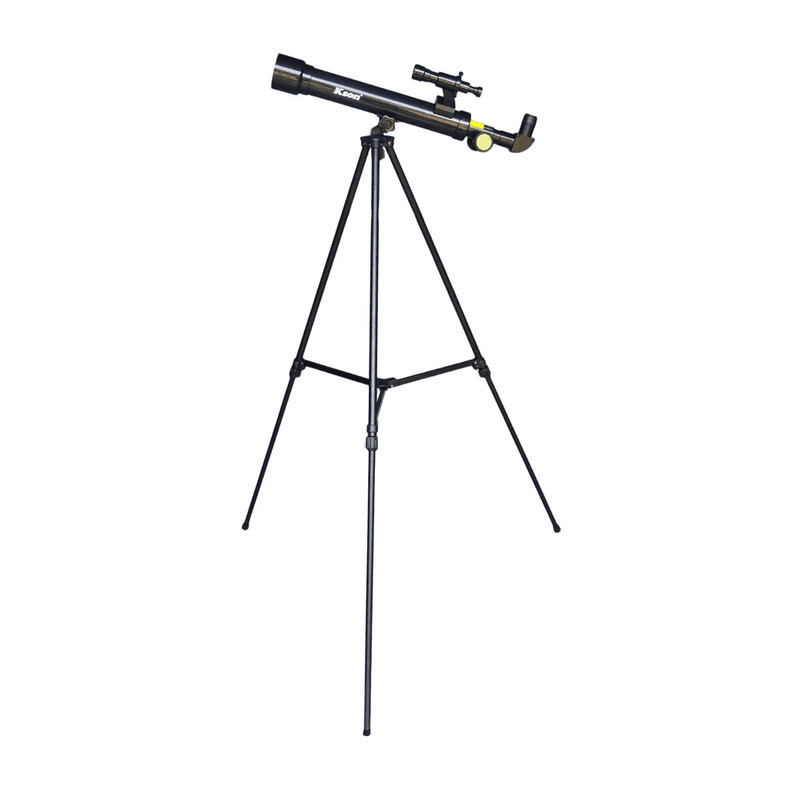
A refracting telescope uses an objective lens at the front of its optical tube. Light passes through the lens and travels directly toward the eyepiece at the rear.
One of the biggest advantages of this design is simplicity. The optical tube is sealed, the main lens is relatively resistant to losing alignment, and small refractors generally require little maintenance. They can also reach useful observing performance quickly after being taken outside, making them excellent “grab-and-go” telescopes.
This makes a refractor particularly attractive if you live in an apartment, have a small balcony, or simply don't want to spend much time adjusting your equipment before observing.
A small refractor can be especially enjoyable for:
- The Moon and its craters
- Jupiter and its four largest moons
- Saturn and its rings
- Bright double stars
- Bright star clusters
- Terrestrial observation during the daytime
However, refractors have a major disadvantage: large, high-quality lenses become expensive very quickly. Manufacturing a large precision lens is considerably more demanding than producing a similarly sized mirror. As a result, reflectors generally provide substantially more aperture for the same budget.
What about the colorful halos?
Traditional achromatic refractors can suffer from chromatic aberration, commonly seen as purple, blue or red color fringing around very bright objects such as the Moon or planets.
-400x243.png)
More sophisticated apochromatic, or “apo,” refractors use specialized optical designs and glass to greatly reduce this effect. They can deliver superb planetary and astrophotographic images, but their prices can be much higher than those of basic achromatic refractors.
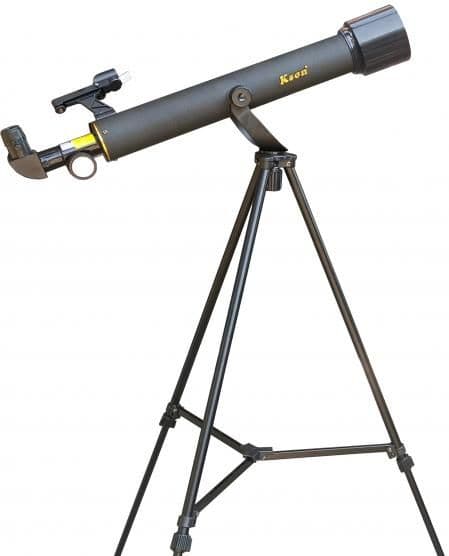
For example, the KTA 60050U is a compact 50 mm refractor with a 600 mm focal length and f/12 focal ratio. Its small aperture and simple alt-azimuth configuration make it oriented toward basic, portable observing rather than serious deep-sky work.
Reflectors: More Aperture for Your Money

Reflecting telescopes take a different approach. Instead of sending light through a large objective lens, they use a curved primary mirror to gather and focus it.
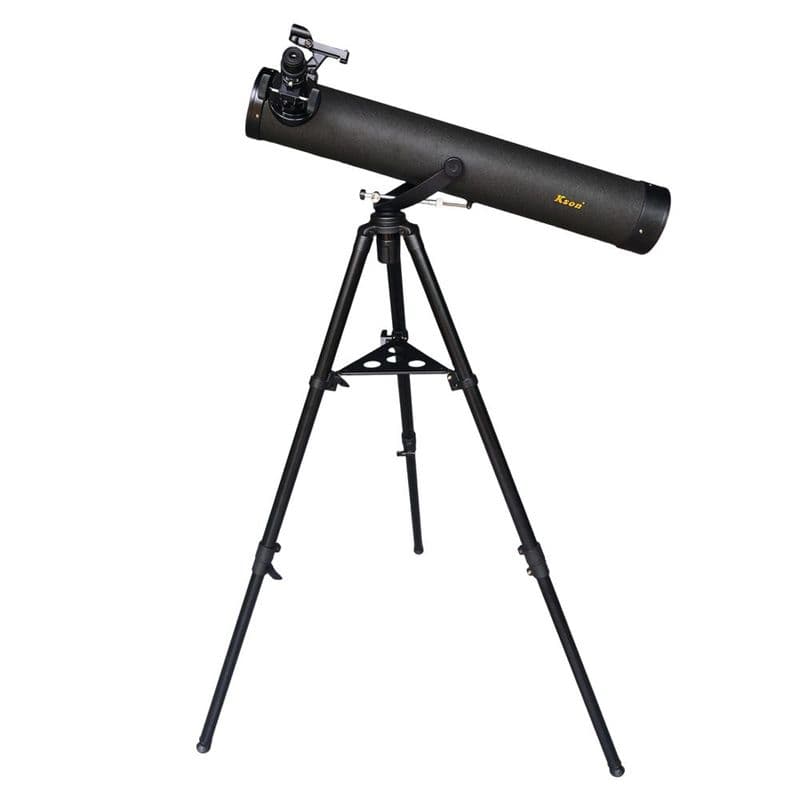
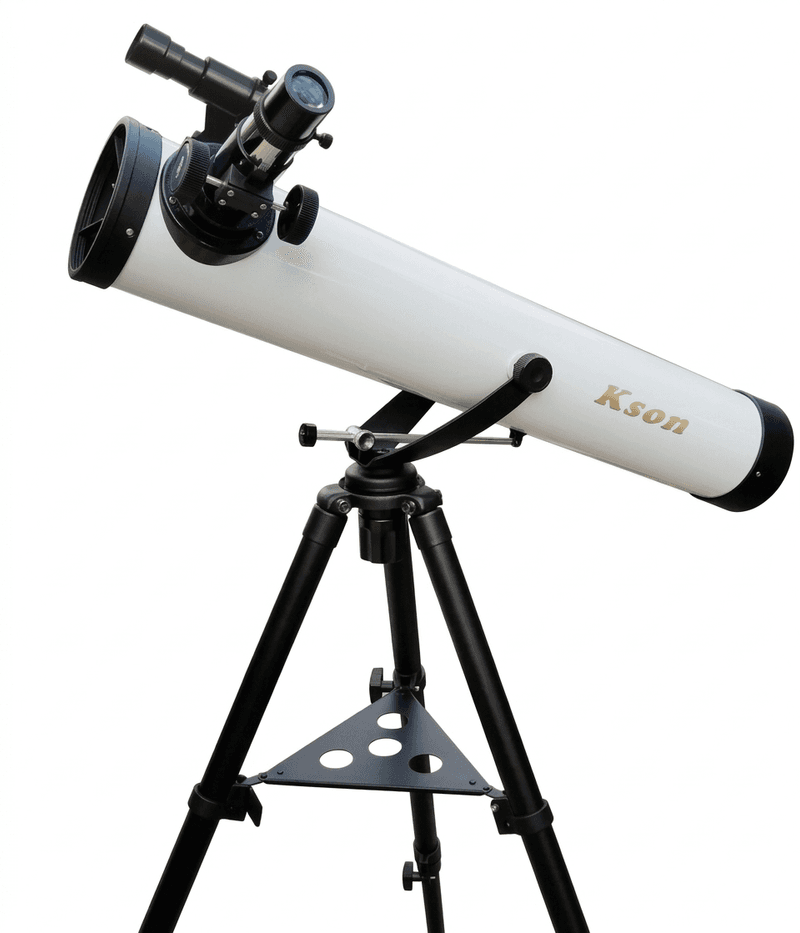
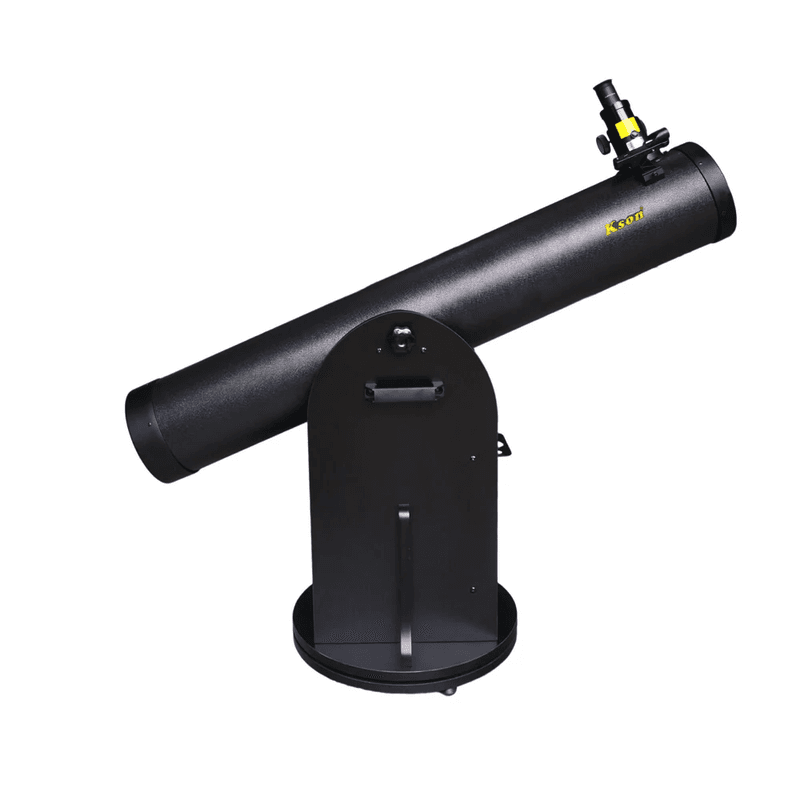
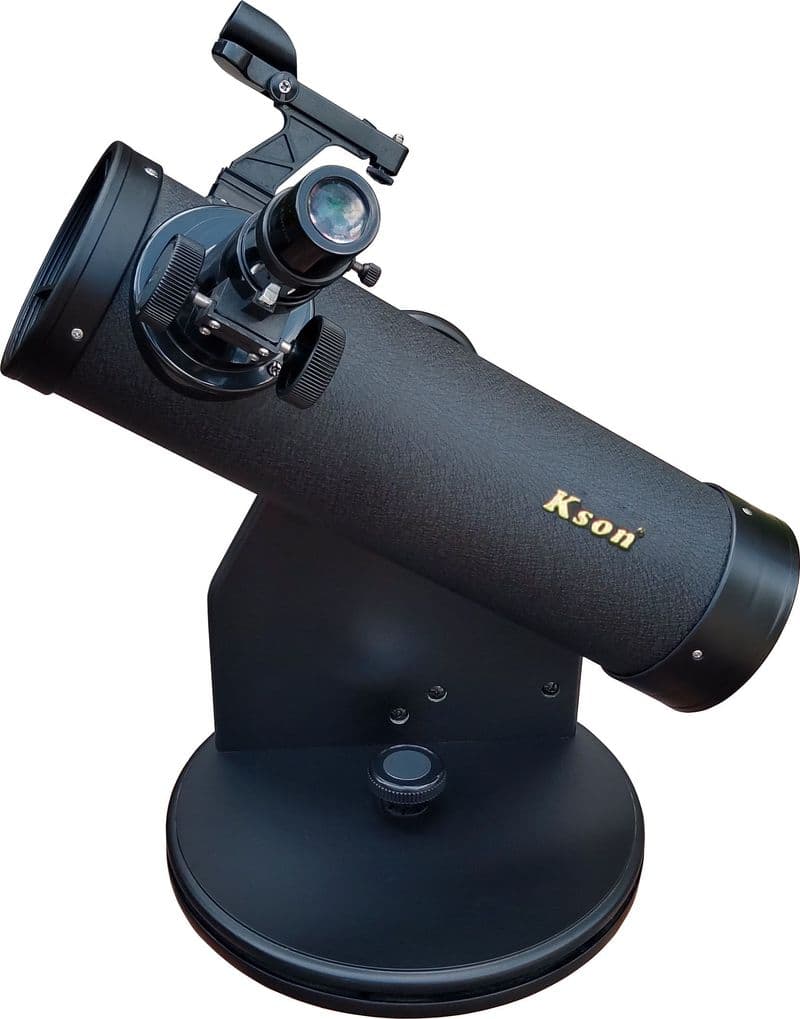
The most common beginner reflector is the Newtonian reflector, developed from Isaac Newton's reflecting telescope design. A curved primary mirror sits toward the back of the tube, while a smaller secondary mirror redirects the focused light toward an eyepiece near the front.
-400x230.jpg)
The big attraction is aperture.
A larger aperture collects more light, allowing you to see fainter objects and resolve finer details under suitable observing conditions. This is particularly valuable when hunting for galaxies, nebulae and globular clusters.
And because mirrors are generally less expensive to manufacture at large sizes than precision objective lenses, reflectors can offer significantly more aperture for your money.
Why Aperture Matters So Much
Imagine comparing a small 50 mm telescope with a 114 mm telescope.
The 114 mm telescope has more than twice the diameter of the 50 mm telescope, but its light-collecting area is proportional to the square of the diameter. Ignoring central obstruction and optical transmission losses, a 114 mm aperture has roughly 5.2 times the light-collecting area of a 50 mm aperture.
That difference becomes particularly noticeable on faint deep-sky targets.
This is why a larger reflector can reveal objects that may appear extremely faint or invisible through a small refractor. Under dark skies, additional aperture can turn a barely visible fuzzy patch into a more recognizable structure.
But aperture isn't everything. Optical quality, atmospheric turbulence, sky brightness, magnification and the observer's experience all influence what you actually see. A large telescope under severe light pollution cannot magically produce dark skies.
A Practical Example: 114 mm Reflector
The Celestron StarSense Explorer LT 114AZ illustrates the aperture advantage of a beginner reflector. It uses a 114 mm Newtonian optical system with a 1000 mm focal length and f/9 focal ratio. Celestron states that its StarSense system can help users locate planets, nebulae, galaxies, star clusters and double stars, with darker locations allowing more faint deep-sky objects to become visible.
Compared with a 50 mm refractor, its considerably larger aperture gives it a major theoretical advantage in light gathering.
However, there's an interesting lesson here: don't judge a telescope solely by its aperture or marketing description. Optical design and execution matter. The LT 114AZ's published specifications identify it as having a spherical primary mirror, and independent reviews have raised concerns about its particular optical configuration.
The broader lesson is valuable when shopping: a bigger number on the box doesn't automatically mean a better telescope.
Refractor vs. Reflector: Which Is Better for Planets?
Both can be excellent.
Refractors have a reputation for producing high-contrast, sharp images, particularly in smaller apertures. Their unobstructed optical path can give bright objects such as the Moon, Jupiter and Saturn a very clean appearance.
But a good reflector with substantially more aperture can also provide outstanding planetary views. Modern reflectors can deliver impressive detail on Jupiter and Saturn when their optics are properly aligned and thermally stabilized.
So don't think:
Refractor = planets
Reflector = deep sky
A better way to think about it is:
High-quality optics + sufficient aperture + good atmospheric conditions = excellent planetary observing.
Reflector Maintenance: The Trade-Off for More Aperture
The reflector's biggest disadvantage for beginners is maintenance.
Because the primary and secondary mirrors must remain correctly aligned, reflectors occasionally require collimation. Moving the telescope frequently can make this necessary more often. Fortunately, collimation is a routine skill that becomes much easier with practice.
Reflectors also have open optical tubes, meaning dust can eventually accumulate inside. The mirrors may require cleaning after extended use, although unnecessary cleaning should be avoided because optical surfaces are delicate.
For someone who enjoys learning how their telescope works, this isn't necessarily a disadvantage. For someone who wants to put the telescope outside and immediately observe, a refractor may be more appealing.
Choose a refractor if you want:
- Quick setup and easy observing
- Minimal optical maintenance
- A compact telescope for balconies or small spaces
- Sharp views of the Moon and planets
- Bright double stars and star clusters
- A straightforward beginner experience
- Terrestrial viewing as well as astronomy
Choose a refractor if you want: - Maximum aperture for your budget
- Better access to faint deep-sky objects
- Galaxies, nebulae and globular clusters
- A telescope you can upgrade and learn to maintain
- A large aperture without paying refractor-level prices
- A Dobsonian-style setup for visual astronomy